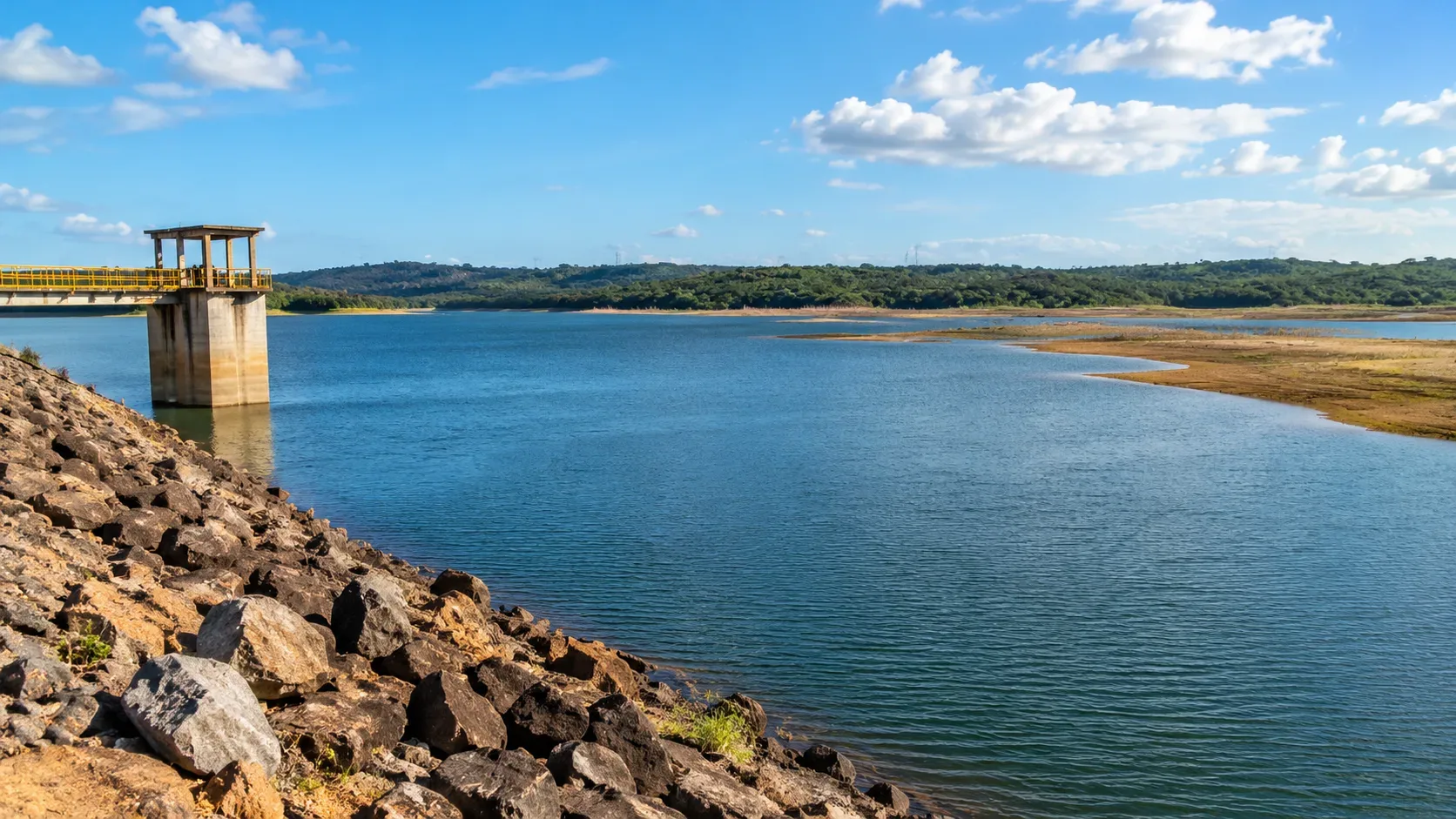
The Sindicalista Jaime Umbelino de Souza Dam, known as the Poxim Dam, in São Cristóvão, entered a water-scarcity alert status on October 20, 2026, after reaching 28.6% of usable storage on October 19. The alert calls for closer monitoring and action by water authorities, but does not itself mean that Greater Aracaju is subject to rationing or that supply has been interrupted because of the reservoir.
Why was the dam placed on alert?
The Sergipe State Secretariat for the Environment, Sustainability and Climate Action (Semac) published Ordinance No. 43/2026 after 8.55 million cubic meters of stored water were recorded. The state classification is normal above 50%, attention from 30% to 50%, alert from 10% to 30%, and emergency below 10%. Thus, 28.6% is an alert level, not an emergency level.
On October 19, 2025, the same reservoir stood at 88% of usable storage, according to Semac. The department reported a sustained decline since July 2026 during a period of inadequate rainfall and high evaporation. Greater Aracaju recorded 565 millimeters of rain from May to August, 35.9% below the 881 millimeters expected for that period, according to the state figures.
What could happen to Aracaju water supply?
According to the Sergipe state government, the Poxim Dam accounts for approximately 30% of the capital’s water supply. The other 70% is attributed to the São Francisco water pipeline. Falling Poxim reserves make planning for water abstraction and system operations more important, but these percentages alone cannot predict when or where an outage might occur.
As of the state communication consulted on October 20, the document did not announce citywide rationing, a rotating supply schedule, or a list of neighborhoods facing cuts because of the Poxim alert. Nor should Aracaju’s supply percentages be assumed to apply to Nossa Senhora do Socorro, Barra dos Coqueiros, or São Cristóvão: distribution and operations must be verified for each area.
What steps were announced for Deso and Iguá?
Semac announced Ordinance No. 43/2026 with instructions to notify the Sergipe River Basin Committee, the State Water Resources Council and authorized water users. The department announced daily reservoir monitoring, meetings every two weeks in its Situation Room, and stronger inspections of unauthorized water abstraction, including suspension of users operating without permits.
The state statement says the ordinance also provides for steps to be taken by the Sergipe Sanitation Company (Deso), responsible for water abstraction at the dam, and Iguá Sergipe. Because the full legal text could not be accessed during this review, the specific technical obligations, deadlines or operational changes applying to each company cannot be safely detailed. The institutional report provides no rationing timetable.
What about other Greater Aracaju residents?
The 30% figure explicitly applies to Aracaju. For residents of São Cristóvão, Nossa Senhora do Socorro and Barra dos Coqueiros, the effect on a street, neighborhood or distribution system depends on information from the service provider responsible for that area. Without a specific operational notice, cuts in those municipalities cannot be attributed to the ordinance.
Separate operating incidents also exist. A notice issued on October 17 about a leak found in the São Francisco pipeline describes maintenance, potentially affected areas and restoration times projected at that point. This should not be confused with the Poxim water-scarcity alert, and earlier restoration estimates must not be presented as the current status on October 20.
Where to check updates
The state government directs residents to the SERhidro portal for reservoir levels and historical trends. To find out whether supply is interrupted at a specific address, check the latest notice from the local service provider. Using water responsibly reduces waste but does not replace official operational guidance.
Information checked on October 20, 2026. Reservoir levels, measures and supply conditions may change; the cited statement provides no confirmed date for depletion or for a return to normal conditions.