The Santo Antônio Lookout, at Largo Garcia Rosa on top of Santo Antônio Hill in Aracaju, is scheduled to be handed over on Thursday, October 29, 2026, at 5 p.m. local time (UTC-3), according to an official Sergipe state government invitation published on October 27. The work includes a panoramic walkway, a new staircase, lighting, landscaping and gathering areas. As of this article's check on the morning of October 29, the ceremony was still a scheduled event, not a verified completed inauguration. The government notice did not specify regular opening arrangements after the handover.
What the lookout renovation includes
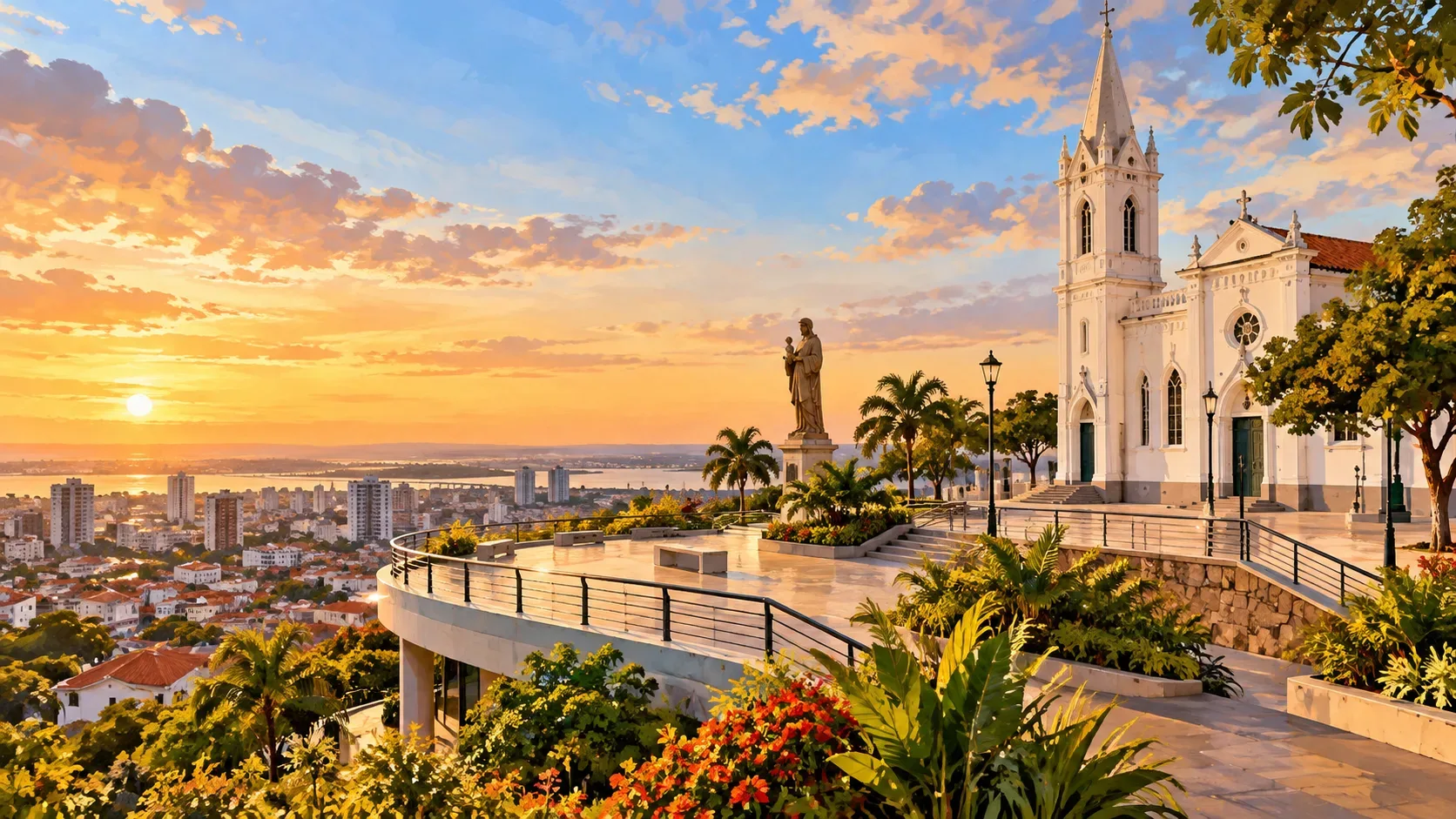
The upgrading work focuses on Largo Garcia Rosa, opposite Santo Antônio Church, and is part of the state government's Viva-SE program. The urban and landscape design was prepared by the Instituto Banese team. According to the government, the interventions are intended to expand opportunities to enjoy the city panorama and make movement around the site easier.
- Panoramic views: a metal walkway and viewing guardrail facing the city.
- Movement: a new staircase, paving and announced accessibility improvements.
- Setting: upgraded lighting, landscaping, visitor signs and street furniture.
- Gathering: areas intended for residents, visitors and people interested in local heritage to spend time.
In an October 13 update, Sergipe's Department of Urban Development and Infrastructure (Sedurbi) reported an intervention area of 2,125 square meters and an initial investment of R$ 1,625,064.73. The October 27 official invitation, in turn, reports an investment of more than R$ 2.6 million for the handover. The figures were released at different stages, and the consulted publications do not provide a detailed reconciliation. The difference therefore cannot automatically be described as a verified contract increase or a final audited cost.
The statue of Saint Anthony was installed in June
A prominent feature of the site is a 12-meter-tall Saint Anthony sculpture made of fiberglass by Sergipe artist Gilvan Donato. The state government recorded its installation on June 8, 2026. That step must not be confused with the October 29 scheduled handover, which concerns the refurbished lookout as a whole.
Visitors therefore have three distinct reasons to explore the area: look across the city, see a contemporary artwork connected to religious tradition, and discover a place associated with Aracaju's early history. The statue and church have religious meaning for worshippers, but an interest in the architecture, history and landscape does not require taking part in religious services.
Where the hill is and how to find it
The landmark is Largo Garcia Rosa, opposite Santo Antônio Church, in the Santo Antônio neighborhood in northern Aracaju. Avenida João Ribeiro is a historic connection between the city center and the hill area, identified by the Brazilian Architecture and Urbanism Council and historian Amâncio Cardoso. Look for the church and square to locate the destination rather than confusing this lookout with attractions on Atalaia Beach's waterfront promenade.
The consulted official sources do not specify particular bus routes, parking availability, a fully accessible route or admission procedures after the ceremony. Although the design announces accessibility improvements, that alone does not prove that every section can be traveled without obstacles. Visitors, particularly those who require step-free access, should check updated instructions from the responsible authority before setting out.
What else to see beyond the view
Santo Antônio Church stands beside the lookout. It is part of the hill's historic landscape and is connected to the neighborhood's Catholic traditions. The Archdiocese of Aracaju documents a chapel dedicated to the saint in the former settlement and mentions ecclesiastical authorization from 1778 for its administration. The hill is also associated with decisions linked to the transfer of the provincial capital from São Cristóvão to Aracaju in 1855.
This historical connection does not mean that the planned city was built entirely on top of the hill. The Brazilian Architecture and Urbanism Council explains that the new capital's urban layout developed on lower ground, where today's city center stands. For visitors, the contrast between the church, square, statue and city view helps illustrate different periods in Aracaju's development.
What remains to be confirmed before visiting
Status on October 29, 2026, before 5 p.m.: the ceremony has been announced, but the consulted documents do not establish that the inauguration has already taken place. They also do not specify regular opening hours, possible admission charges, nighttime access rules, access inside the church or the operational conditions of all paths after the handover. There is no verified basis to promise permanent entry, free admission or an up-to-date worship schedule. These details need to be checked in new official notices before planning a visit, especially for a particular date and time.
Sources and references
- Government of Sergipe, official invitation dated October 27, 2026
- Sedurbi, construction update of October 13, 2026
- Government of Sergipe, sculpture installation on June 8, 2026
- Brazilian Architecture and Urbanism Council, Aracaju and Santo Antônio district history
- Archdiocese of Aracaju, history of the chapel and city
- Amâncio Cardoso, historical account published April 14, 2026