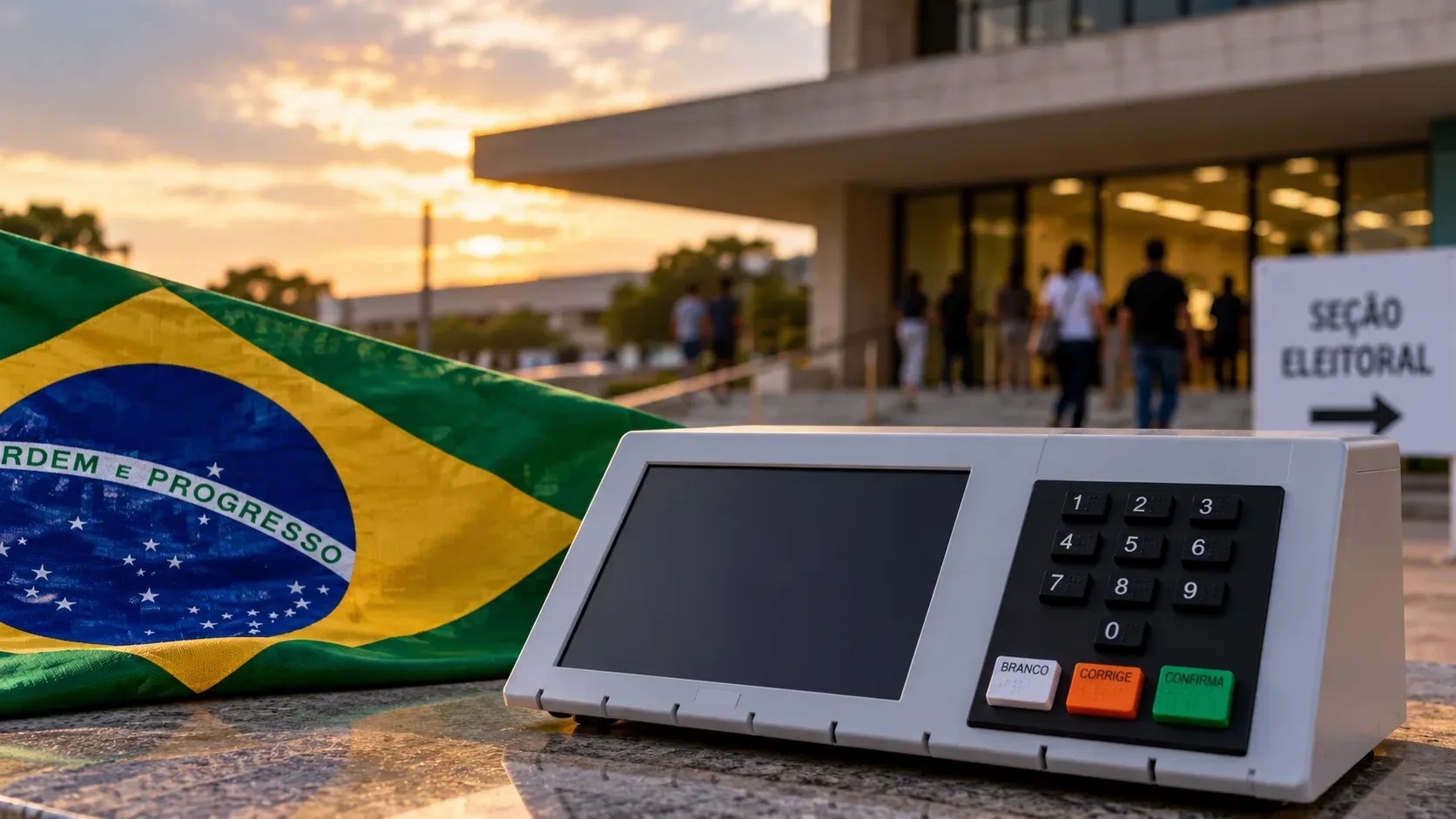

Luiz Inácio Lula da Silva (PT) was reelected president of Brazil on Sunday, October 25, 2026, defeating Flávio Bolsonaro (PL). In Sergipe, the official tally at 9:13 p.m. recorded 988,598 votes for Lula, or 69.53% of valid votes, compared with 433,195 (30.47%) for his opponent. The state result remained partial, with 99.95% of polling sections counted. The lead means the president-elect received a proportionally stronger vote in Sergipe than in Brazil as a whole.
How Sergipe voted compared with Brazil
In the national bulletin produced by the Superior Electoral Court (TSE) at 9:26 p.m., Lula had 64,144,599 votes (51.76% of valid votes), while Flávio Bolsonaro had 59,774,442 (48.24%), with 99.87% of polling sections counted. Lula’s share in Sergipe was 17.77 percentage points higher than his nationwide share, based on these two provisional snapshots from election night. These are votes already counted in each geographical area, not forecasts.
The Sergipe snapshot included 1,421,793 valid votes out of 1,466,039 ballots cast. There were 13,129 blank ballots and 31,117 invalid ballots. Blank and invalid ballots are excluded from the candidates’ valid-vote percentages.
What changed since the first round
On October 4, Lula received 856,019 votes in Sergipe (62.75% of valid votes), while Flávio Bolsonaro received 417,839 (30.63%), according to a Sou de Sergipe analysis based on TSE data. The runoff tally shows an increase in Lula’s vote count and share of valid votes. But this comparison cannot show where individual votes shifted: only two candidates remained in the runoff, and turnout may also change.
Voting patterns varied across Sergipe. Research by journalist Gladson Cardoso of Sou de Sergipe found that Lula led in all 75 municipalities in the first round, but by different margins: 54.07% in Aracaju, 55.26% in Nossa Senhora do Socorro, and 79.75% in Santo Amaro das Brotas. These are first-round figures, not the results from October 25. In the runoff, with 100% of polling stations counted in Aracaju, Lula won 216,858 votes (62.07%) and Flávio Bolsonaro 132,528 (37.93%), according to CNN Brasil using TSE figures.
What reelection may mean for Sergipe
The vote demonstrates Lula’s electoral strength in Sergipe, but it does not automatically determine public works, funding allocations, or changes to government services. Concrete effects will depend on federal decisions, budgets, congressional action, submitted projects, and implementation by the relevant agencies.
At state level, Fábio Mitidieri (PSD) was also reelected governor, but in the first round, with 727,291 votes (59.27% of valid votes). According to the TSE, the governor's winning coalition included the Brazil of Hope Federation, of which the PT is a member. Even so, the vote does not guarantee administrative cooperation, additional funding, or federal priority for Sergipe. Concrete outcomes would require verifiable public commitments and decisions.
Tally status and validity
The Sergipe and national figures cited above refer to election-night snapshots from October 25, 2026, at 9:13 p.m. and 9:26 p.m., respectively, Brasília time, also the local time in Sergipe. They may change before final tabulation. TRE-SE reported voting in all 75 municipalities and noted that national vote consolidation is handled by the TSE.
Sources and references
- TSE: boletim nacional do segundo turno, 25/10/2026, 21h26
- UOL: totalização presidencial em Sergipe, segundo turno
- CNN Brasil: resultado em Aracaju no segundo turno, 25/10/2026
- Sou de Sergipe: votação em 75 municípios no primeiro turno, 23/10/2026
- TSE: reeleição de Fábio Mitidieri no primeiro turno, 04/10/2026
- TRE-SE: balanço da votação em Sergipe, 25/10/2026
- InfoMoney: confirmação jornalística da reeleição, 25/10/2026