In Divina Pastora, a municipality in eastern Sergipe, Brazil, craftswomen make Irish lace using needles, thread and a cord called lacê. The practice was recognized by Brazil's National Institute of Historic and Artistic Heritage (Iphan) as Brazilian Cultural Heritage: its council approved registration on November 27, 2008, and the craft was entered in the Book of Registered Knowledge on January 28, 2009. That recognition concerns the knowledge handed down by lacemakers, not any single finished piece.
How is Irish lace made?
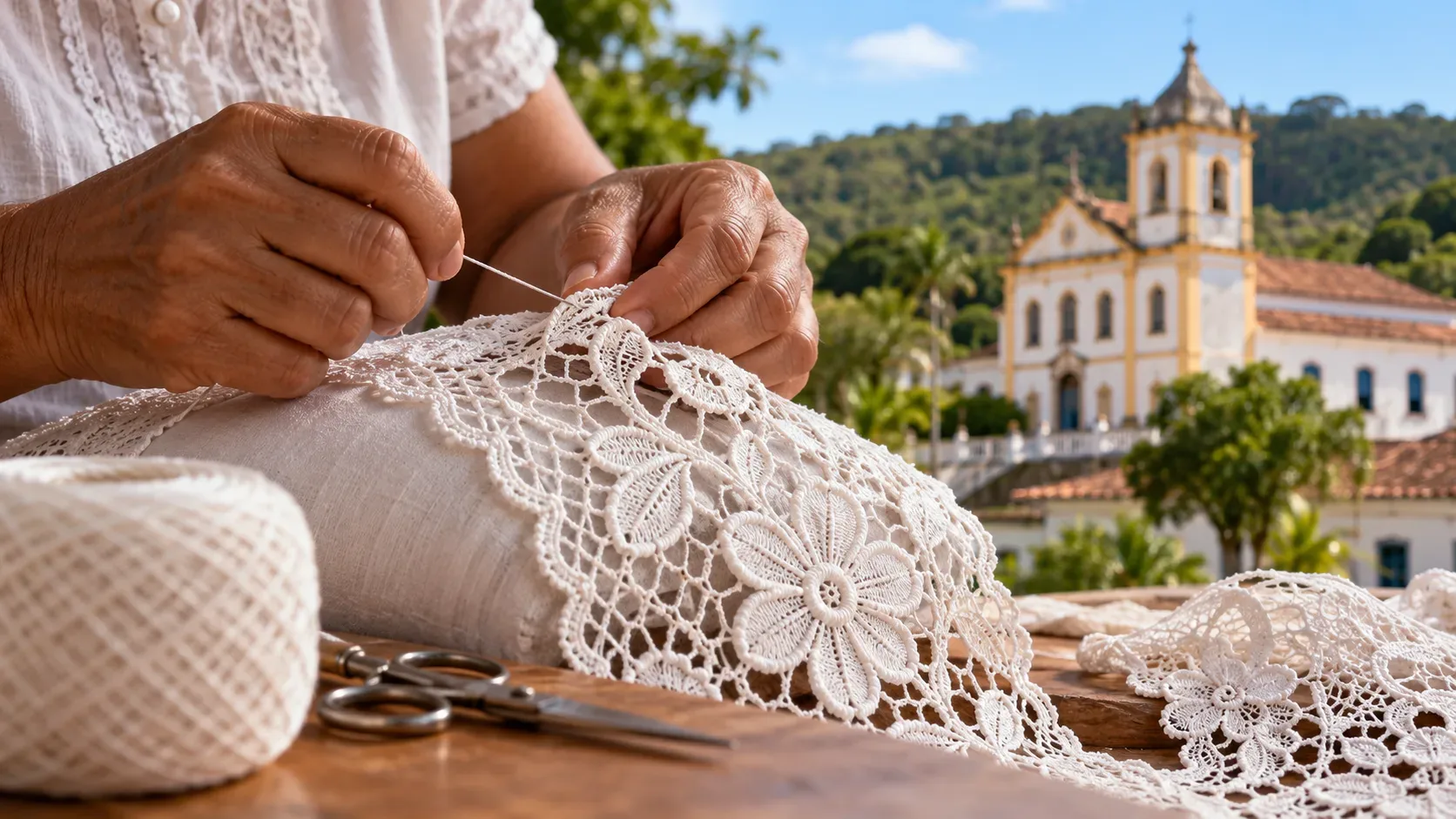
Work begins with a drawing that guides the lace's shape, known locally as a debuxo or risco. Lacê is a shiny-looking cord laid along its outlines; spaces between the curves are filled with stitches made by hand using a needle and thread. This is needle lace, and the lacê cord forms part of the piece's visual structure.
- The lacemaker prepares or copies a design onto paper to guide the work.
- The lacê cord is basted along the outlines and attached to the support used while making the lace.
- Using a needle and thread, the craftswoman makes stitches that join the outlines and fill the gaps.
There is no single repertoire of stitches or designs. Iphan records traditional names drawn from everyday life, such as pé-de-galinha (chicken's foot) and espinha-de-peixe (fishbone). Each stage requires technical skill, while the result also reflects the lacemakers' creative choices.
Why did Divina Pastora become a center for the craft?
Iphan links the craft's development in the municipality to the history of sugar plantations, social changes following the abolition of slavery and work opportunities created by women. Knowledge once associated with socially privileged groups was adopted and transformed by local craftswomen.
The tradition is passed on through shared practice. Master lacemakers design pieces, guide their production and teach stitches to other women. The Association for the Development of Irish Lace in Divina Pastora (Asderen) submitted the registration request to Iphan with the consent of the community that holds the tradition.
Research by Carlos Henrique Paes, reported by the Federal University of Sergipe (UFS) in June 2026, compared the Sergipe technique with lace styles developed in Ireland. It points to similarities but also to adaptations made in Sergipe, particularly the use of lacê cord. The European origins therefore do not erase local creativity and identity.
What does intangible cultural heritage status mean?
Federal registration recognizes practical knowledge with value for a community's memory, identity and social life. For Irish lace, the heritage element is the way the technique is made and taught, including skills, working relationships and learning methods. It does not mean that Iphan individually certifies every piece offered for sale.
The council made its decision on November 27, 2008; registration in the Book of Registered Knowledge followed on January 28, 2009; and Iphan records revalidation of the designation on November 11, 2021. A dossier published by the institution in 2014 documents materials, stitches, work organization and networks through which the craft is passed on.
Cultural heritage registration is not a geographical indication
In addition to Iphan's registration, Brazil's National Institute of Industrial Property (INPI) granted the 'Divina Pastora' Indication of Source for lacê needle lace on December 26, 2012. It recognizes the product's geographical origin, unlike intangible heritage registration, which concerns traditional knowledge. These two forms of recognition should not be confused.
How is the tradition safeguarded, and what challenges does it face?
Safeguarding lace-making is not just about preserving finished pieces: it includes passing on skills, involving craftswomen in decisions and maintaining the conditions needed for production. Iphan documented meetings with associations in 2021 to discuss a factory's suspension of lacê supplies. That record describes a difficulty at the time, not evidence of a current shortage.
Official documentation also records mobilization and research initiatives. This guide does not announce open workshops, studio visits, sales addresses or prices because such services require separate, up-to-date confirmation from those responsible.